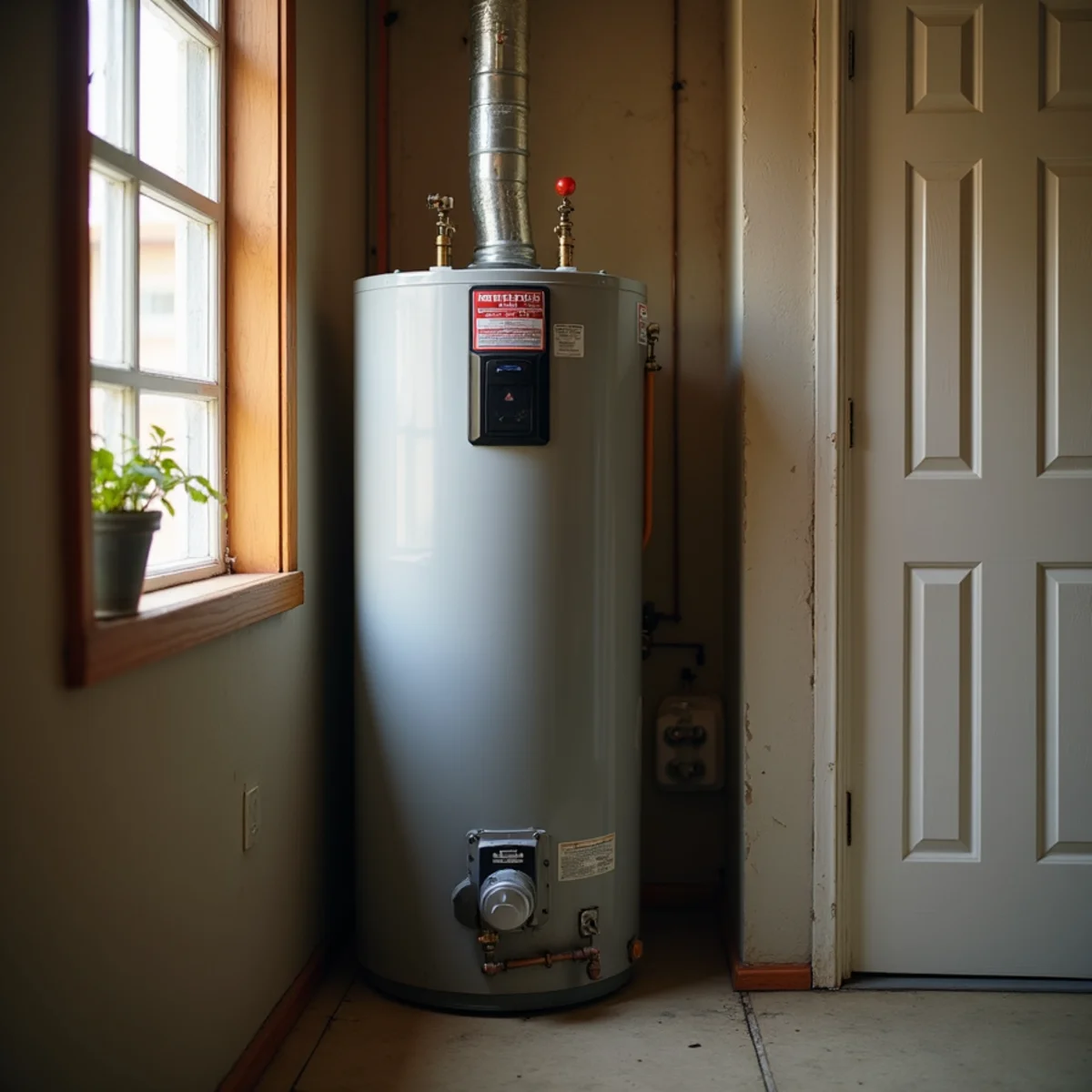
Safety note
Water heaters involve gas or electrical connections and hot water under pressure. Do not open gas lines or work on the burner or wiring yourself; leave those connections to a professional.
Start with the Age
Age is the factor that colors everything else, so start here. A conventional tank water heater usually gives a home somewhere in the range of ten to twelve years of service, more with diligent maintenance and good water, less without. A unit well into that window that throws a serious fault is often telling you it is near the end regardless of the specific part that failed, and pouring money into a major repair on it tends to just delay the inevitable.
A newer heater with a minor problem is a different story and is almost always worth repairing. Pin down the age first, because it frames every judgment that follows. If you cannot find a manufacture date on the label, the serial number usually encodes it, and a plumber can decode it for you.
Match the Symptom to the Path
Some faults are clean repairs at any age. A misbehaving thermostat, a burned-out heating element on an electric unit, a failed valve, or a loose connection are generally straightforward, contained fixes and do not say anything about the tank's remaining life. Other symptoms carry more weight.
A tank leaking from the body itself is the line in the sand: it means the steel has corroded through, no repair brings it back, and the unit has to be replaced before it lets go and dumps its full volume of water onto the floor. Rust-tinted hot water, a pilot or burner that will not stay lit, and heavy rumbling from sediment sit in between, sometimes correctable, but on an aging heater often a sign the end is close.
- Usually repairable: thermostat, heating element, valves, connections, anode rod
- Not repairable: a leak from the tank body itself
- Depends on age: rusty hot water, heavy sediment, internal corrosion
- Repeat faults on one unit point toward replacement
Signs That Point Toward Replacement
A few patterns push the decision firmly toward a new unit rather than another repair. Water pooling under the tank from the body itself is the clearest, since a corroded tank cannot be patched. Rusty or cloudy hot water on an older heater often signals the tank is corroding from the inside out. And a heater you have already fixed more than once in a short span is usually telling you the failures are going to keep coming.
Declining performance belongs on the list too. A tank that runs out of hot water faster than it used to, takes longer to recover, or heats unevenly is often losing capacity to sediment and age rather than to a single fixable part. When several of these show up together on a heater past its prime, replacement is generally the sounder investment.
- Water leaking from the tank body, not just a fitting
- Rusty or discolored hot water on an older unit
- Repeated repairs in a short window
- Shrinking hot-water supply or slow recovery
Related service
Water Heater Installation in Sacramento
Removal of an aging unit and installation of a right-sized tank or tankless water heater matched to your household's real hot-water demand and installed to code.
Explore this serviceWeigh Repair Against Replacement: The 50 Percent Rule
A reliable rule of thumb is to hold the repair cost up against the price of a new unit. Once a repair on an older heater climbs toward half of what replacement would run, the smarter move is usually to put that money toward a new, more efficient heater rather than sink it into an aging tank that may fail again soon after.
Flip that for a newer unit with an inexpensive fix, which is clearly worth repairing. The math shifts steadily as a heater ages: repairs come more often and cost more each time, while a newer model recovers faster and runs more efficiently, trimming the energy it takes to keep your water hot. Factor that ongoing efficiency gain in alongside the repair bill, not just the one-time numbers.
How Sacramento's Hard Water Factors In
Local hard water shortens water-heater life, plain and simple. It drops a layer of mineral sediment across the tank bottom that insulates the burner from the water, drags down efficiency, and speeds up wear on the tank. A heater that has gone years without a flush can be carrying a thick, hardened layer of it, and that buildup is a major reason a tank reaches the replace-it stage earlier here than it might elsewhere.
That belongs in your decision. A tank that has spent years marinating in hard-water sediment tends to wear out ahead of the same model in a soft-water region, so weigh local conditions rather than the label's rated lifespan. Regular flushing and a sound anode rod slow that clock, which is why maintenance history matters as much as age when you are making the call.
Related service
Tankless Water Heaters in Sacramento
Installation, conversion, repair, and descaling of on-demand tankless water heaters that heat water only as you draw it.
Explore this serviceIf You Replace, Tank or Tankless?
Replacement is also the natural moment to ask whether the same style of heater still suits the home. A conventional tank is familiar and simpler to install, while a tankless unit heats water on demand, takes up less space, and tends to last longer, though it carries a higher upfront cost and sometimes needs supporting upgrades. Household size, hot-water habits, and available space all feed the choice.
There is no single right answer, only the one that fits your home. It is worth having the options laid out plainly rather than defaulting to whatever was there before, since a replacement is a long commitment either way.
Getting a Straight Assessment
The surest way through is to have the heater evaluated so the recommendation fits its real condition and age instead of a hunch. A professional can tell you whether you are looking at a simple part swap or a unit that has reached the end of its service life, and can spot corrosion or sediment that is not obvious from the outside.
For help making the call, contact Bridelyra Plumbers at +1 (207) 419-2600. If replacement is the answer, it is also the natural moment to weigh whether a tank or tankless unit better suits your home.
Repair or Replace? How to Decide
There is no single right answer — it depends on the unit's age, the problem, and whether the tank itself is leaking.
Repair
Replace
Frequently Asked Questions
A conventional tank unit generally lasts around ten to twelve years, though hard water and skipped maintenance can cut that short. A heater well into that range that develops a major fault is usually a replacement candidate rather than a repair.
Repair usually makes sense when the heater is still relatively young, the fault is a contained part like a thermostat, element, or valve, and the repair costs well under half of a new unit. On an aging tank, or when repairs are stacking up, replacement tends to be the sounder investment.
It depends on where the leak is. Drips from a valve or a supply connection are often a straightforward fix, but a leak from the tank body itself means the steel has corroded through, and at that point the unit needs to be replaced before it fails outright.
Yes. Sediment from hard water settles in the tank, insulates the heating surface, drags down efficiency, and accelerates wear, all of which can bring a heater to the end of its useful life sooner than expected. Regular flushing helps slow it down.
Bridelyra Plumbers Editorial Team
Reviewed for practical accuracy by our plumbing team
Published September 15, 2025 · Updated January 27, 2026