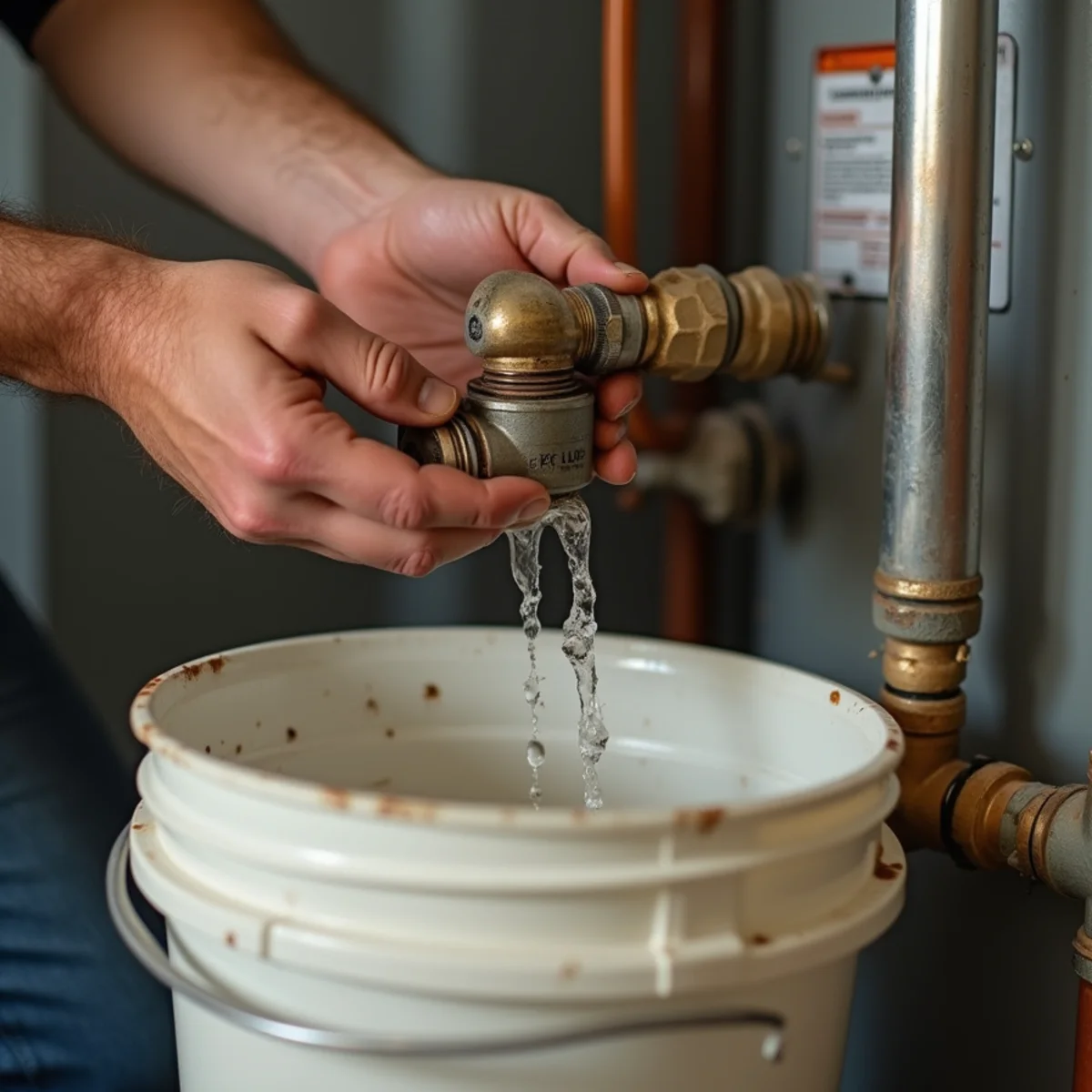
Safety note
Flushing a water heater involves scalding water and, on gas models, a live burner and gas connection. Handle the hot water with care, and do not attempt to adjust the gas valve, gas line, or the temperature-and-pressure relief valve yourself. If you are unsure about any step, have a professional perform the flush.
How Sediment Forms in the Tank
Tap water carries dissolved minerals, mostly calcium and magnesium. Heat that water and the minerals drop out of solution and settle to the bottom of the tank as a gritty layer of sediment. Over time that loose grit compacts and hardens into a dense crust that clings to the tank floor. The harder the water, the more minerals it carries and the faster that layer grows.
With Sacramento's hard water, this is routine rather than rare. Skip the periodic flush and the layer keeps thickening season after season until it starts dragging on how the unit performs. It is worth knowing that even a relatively new heater can hold noticeable sediment within its first year in a hard-water area, so newness is no guarantee the tank is clean inside.
The Efficiency Penalty
In a gas heater, the sediment settles right between the burner below and the water above, and it behaves like a layer of insulation. The burner has to fire longer and harder to drive heat up through that crust, which burns more energy for the same amount of hot water. In an electric unit, sediment that buries the lower element does much the same thing, forcing longer cycles to reach temperature.
That lost efficiency shows up on every energy bill. A heater straining through a thick bed of sediment simply costs more to run, month after month, than a clean tank doing the same work. You may also notice slower recovery, where the tank takes noticeably longer to reheat after a shower or a load of dishes, because the heat is fighting its way through the deposit before it ever reaches the water.
- Insulates the burner or element from the water it heats
- Forces longer run times and higher energy use
- Slows recovery, so hot water returns more slowly after heavy use
- Reduces the tank's usable hot-water capacity
Shortened Lifespan and Added Stress
The damage goes past efficiency. In gas units, sediment traps heat and creates hot spots on the tank bottom where the metal overheats, which speeds up corrosion and weakens the steel. In electric units, a deep layer can bury the lower heating element until it overheats and burns out, a common cause of premature element failure.
Sediment also accelerates wear on the anode rod, the sacrificial component that draws corrosion away from the tank walls, and it can clog the drain valve so future flushing becomes difficult. All of that strain adds up and brings the heater to the end of its life sooner. A great deal of the corrosion that finishes off a tank starts with sediment quietly working away at the bottom.
Related service
Water Softener Services in Sacramento
Installation, repair, and service of water softeners that tame hard water and its mineral buildup.
Explore this serviceThe Warning Signs of Sediment Buildup
Sediment tends to tip its hand well before the tank fails. The most recognizable sign is popping, rumbling, or banging as the unit heats, which is the sound of water pockets trapped beneath the sediment boiling and forcing their way out. Alongside the noise, watch for hot water that runs cold sooner than it used to, slower reheating between uses, a cloudy or rust-tinted look to the hot water, a faint metallic smell, and energy bills creeping upward for no obvious reason.
Any one of these can have another cause, but together they point strongly to a sediment layer settled in the bottom of the tank. Catching these signs early is what gives you the chance to clear the sediment before it does lasting harm to the unit.
- Popping, rumbling, or banging during the heating cycle
- Hot water running out faster and reheating more slowly
- Cloudy, rust-tinted, or metallic-smelling hot water
- Energy bills edging up without a change in usage
How Often to Flush the Tank
Draining the tank clears the loose sediment out before it can compact and harden. For most homes, flushing once a year is the sensible baseline. In hard-water areas like much of the Sacramento region, twice a year is often the better rhythm, since the mineral load builds the deposit faster than average.
A yearly flush is straightforward preventive care and far easier than dealing with an established, cemented layer. If a tank has gone many years without attention, a routine flush may only remove part of what has settled, and a plumber can assess whether the hardened remainder warrants a more thorough service or, in an older unit, replacement.
- Standard water: flush roughly once a year
- Hard water, as in much of Sacramento: consider every six months
- Long-neglected tanks may only partially clear on a single flush

Related service
Plumbing Maintenance in Sacramento
Routine, preventive service that keeps drains flowing, fixtures sound, and hard-water wear in check so small problems never grow into emergencies.
Explore this serviceDo Tankless Heaters Get Sediment Too?
Tankless units do not store water, so they never build the thick bed of sediment a storage tank collects on its floor. They are not immune, though. Hard water still leaves scale inside the heat exchanger, and that scale narrows the passages and drops efficiency in much the same spirit as tank sediment. The fix is a periodic descaling flush rather than a drain, typically recommended about once a year in hard-water areas.
Whichever type you have, the underlying driver is the same mineral content, which is why treating the water at its source pays off across the whole system.
Reducing Buildup at the Source
Regular flushing manages sediment after it forms, but softening the water addresses the cause. A water softener lowers the calcium and magnesium that precipitate when water is heated, which slows how fast sediment and scale form in the first place. That protects not only the water heater but the pipes and fixtures throughout the house.
Pairing routine maintenance with water treatment is the most durable approach in a hard-water region. To schedule a flush, look at a descaling service for a tankless unit, or talk through water treatment options, contact Bridelyra Plumbers at +1 (207) 419-2600.
Frequently Asked Questions
The common tells are popping or rumbling during heating, hot water running out faster and reheating more slowly than it used to, cloudy or rust-tinted hot water, a faint metallic smell, and energy bills edging up. Together they point to a sediment layer settled in the bottom of the tank.
Once a year is a reasonable baseline for most homes. Because much of the Sacramento area has hard water, flushing every six months is often the better choice, since minerals build the sediment layer faster than average. Staying on a schedule is far easier than removing a hardened deposit later.
A regular flush clears loose sediment well, but hardened deposits in a tank that has gone years without attention may not fully break free. Flushing on schedule heads off heavy buildup, which is far easier than trying to remove an established, cemented layer once it has formed.
It can. By lowering the mineral content that drops out when water is heated, softened water slows how fast sediment forms in the first place. That helps both efficiency and lifespan, and it reduces scale in a tankless unit's heat exchanger as well.
Bridelyra Plumbers Editorial Team
Reviewed for practical accuracy by our plumbing team
Published February 9, 2026 · Updated June 13, 2026