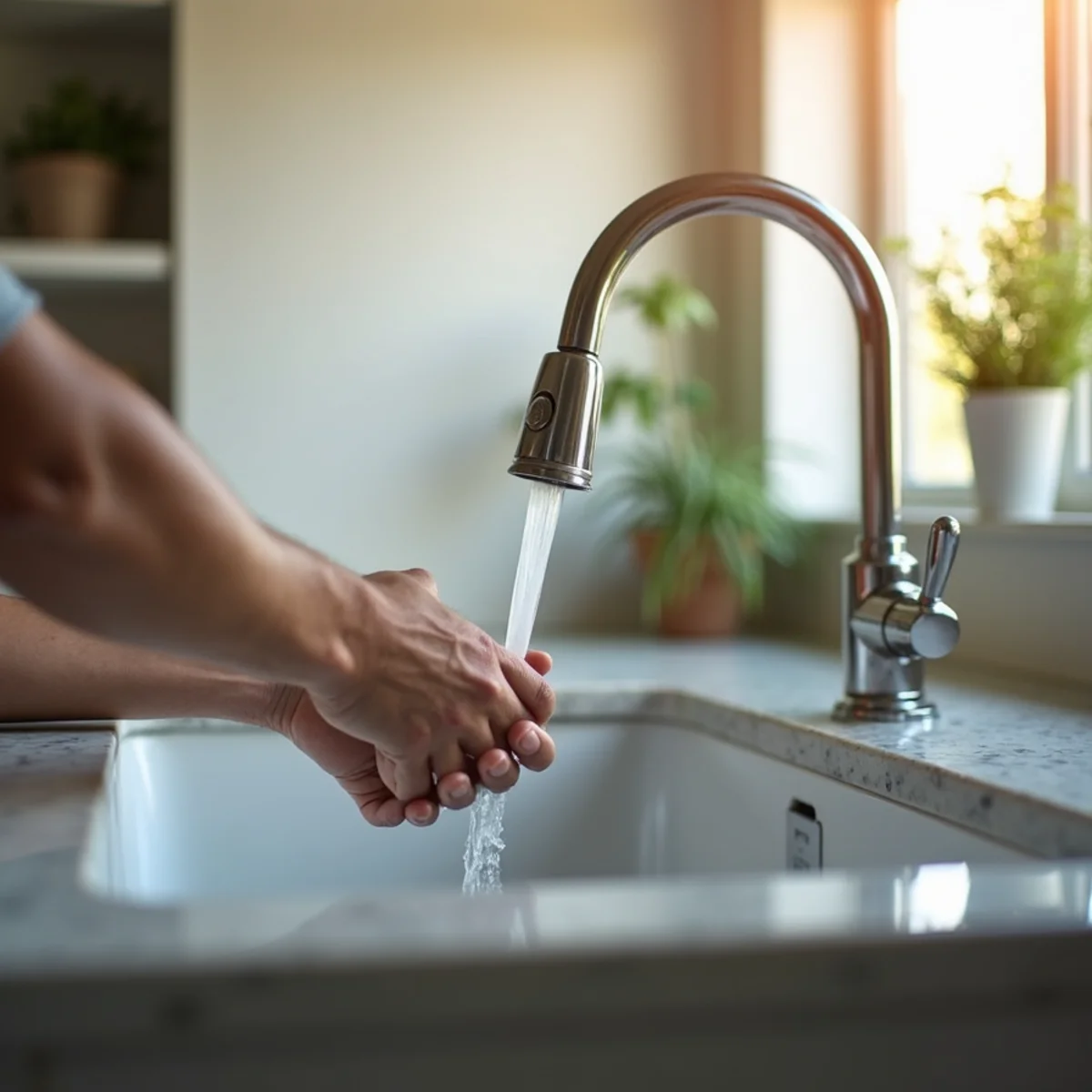
First, One Fixture or the Whole House?
Start by mapping where the pressure dropped, because that single question splits the causes in half. If only the kitchen faucet is weak, the cause is almost certainly local to that fixture, like a clogged aerator, a plugged showerhead, or a failing cartridge. If every tap in the house fell off at once, the trouble lives upstream in the supply, the main line, a shutoff valve, or a pressure-regulating device.
This one distinction saves hours of guessing. While you are at it, check hot and cold separately at a couple of fixtures, because a drop on the hot side alone usually points back to the water heater or its shutoff valve rather than the whole system.
- Single fixture: aerator, showerhead, cartridge, or supply valve
- Hot side only: the water heater or its shutoff valve
- Whole house, sudden: shutoff valve, pressure regulator, or city supply
- Whole house, gradual: mineral scale or corrosion in aging pipe
Rule Out the City and Your Neighbors
Before you troubleshoot your own plumbing, make sure the problem is even yours. Utility work, a water-main break down the block, hydrant flushing, or a hot-weather demand spike can all lower pressure across a whole street, and none of it is anything inside your home.
A quick word with a neighbor settles it fast: if their pressure dropped too, it is a supply-side issue and usually temporary. You can also check your water utility's website or service line for reported outages or maintenance in your area before going any further.
Check the Aerators and Showerheads
When it is a single fixture, the fix is often the smallest, simplest part in your house. The aerator, the little screen that screws onto the tip of a faucet, and the face of a showerhead both trap the mineral grit that Sacramento's hard water carries. Over time that debris chokes the flow to a dribble.
Unscrew the aerator by hand or with pliers wrapped in a cloth, rinse out the grit, and soak the screen in white vinegar to dissolve the scale. For a showerhead, either soak it the same way or tie a bag of vinegar around it overnight. This is a five-minute job that resolves a surprising share of weak-fixture complaints.
- Unscrew and rinse the faucet aerator; soak it in vinegar for scale
- Soak or bag the showerhead in vinegar overnight
- Reinstall and test; if flow returns, you are done

Related service
Leak Detection in Sacramento
Pinpointing hidden water leaks behind walls, under floors, and beneath slabs with acoustic and thermal methods, before they turn into major damage.
Explore this serviceConfirm the Shutoff Valves Are Fully Open
This is the most overlooked cause of a sudden whole-house drop, and it costs nothing to rule out. A main shutoff or a water-heater shutoff that got bumped partly closed, sometimes after recent plumbing work or a valve being turned off and not fully reopened, will throttle flow across the house or on the hot side alone.
Check that every shutoff valve is turned fully open. On a round handle, that means counterclockwise until it stops; on a lever, the handle should sit parallel to the pipe. Also check the meter valve at the property line if it is accessible. It is a common, easily missed fix worth confirming before you assume anything deeper.
A Failing Pressure Regulator
Most Sacramento homes have a pressure-reducing valve, or PRV, where the supply enters the house, usually a bell-shaped brass fitting near the main shutoff. Its job is to keep incoming municipal pressure at a safe, steady level, typically somewhere in the range of 45 to 60 psi.
When a regulator starts to fail, pressure can sag suddenly across every fixture, or in other cases climb too high and stress the whole system. A regulator is not a homeowner adjustment to guess at, over-pressurizing your plumbing can cause real damage, so if you suspect the PRV, have it tested and set with a gauge by a plumber rather than turning the screw blindly.
Mineral Scale and Aging Pipe
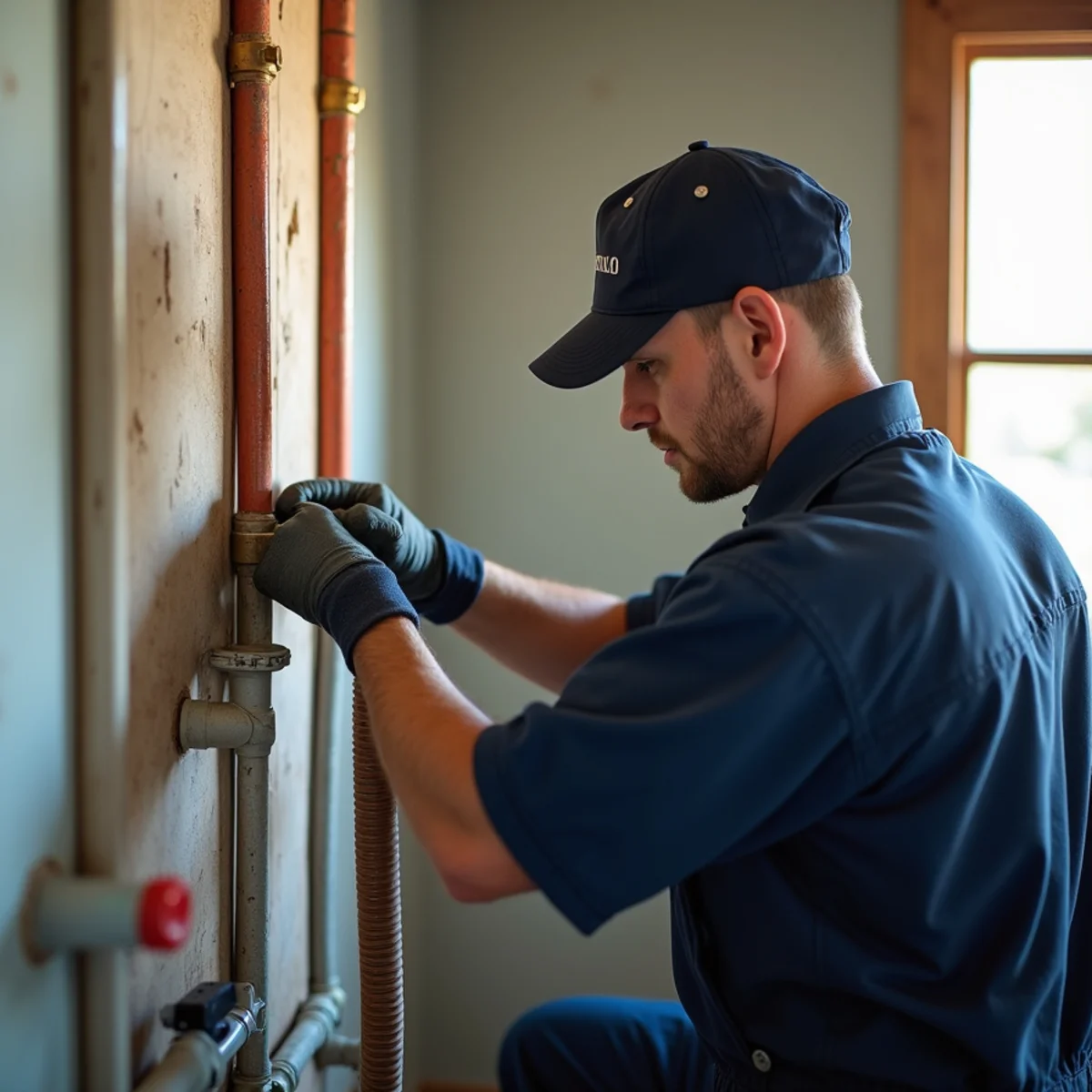
When the drop came on gradually over months or years rather than overnight, the cause is often the pipes themselves. Sacramento's hard water leaves scale that slowly narrows the inside of supply lines. In older homes across neighborhoods like Land Park still running original galvanized steel, corrosion builds along the interior walls until the usable opening is a fraction of the pipe's actual diameter.
Cleaning an aerator is a five-minute fix, but widespread mineral restriction inside aging pipe is a bigger conversation. Where a run has corroded nearly closed, repiping that section is sometimes the only thing that truly restores flow. A plumber can confirm whether corrosion is the real bottleneck before you commit to that kind of work.
Related service
Repiping in Sacramento
Full or partial replacement of corroded, leak-prone galvanized and aging copper with modern copper or PEX water lines built to last.
Explore this serviceWhen a Professional Diagnosis Helps
If cleaning aerators, confirming open valves, and ruling out the city do not bring the pressure back, a professional can measure static and flowing pressure with a gauge, test the regulator, and check for a hidden leak or corroded pipe.
Actual measurement replaces guesswork and keeps you from paying for parts that were never the problem. To have your water pressure evaluated, contact Bridelyra Plumbers at +1 (207) 419-2600.
Frequently Asked Questions
A sudden whole-house drop usually points to a shutoff or main valve that is not fully open, a failing pressure regulator, or a supply-side issue like utility work or a main break. Check with a neighbor first to rule out the city, then confirm every shutoff valve is turned fully open before looking deeper.
A hot-only drop usually traces to the water heater, its shutoff valve, or sediment restricting the tank. Clean the fixture's aerator first to rule out the simpler cause, then check that the water heater's shutoff valve is fully open before looking at the tank itself.
Over time, yes. Mineral scale builds up inside pipes and clogs aerators and showerheads, slowly shrinking the path water travels and reducing flow throughout the house. It is a common issue with Sacramento's hard water and tends to show up as a gradual decline rather than a sudden drop.
It can be. When a pressure drop shows up with a higher water bill, a damp area, or the sound of running water, a hidden leak may be diverting supply before it reaches your taps. A quick meter test, watching for movement with every fixture off, helps confirm whether a leak is to blame.
Bridelyra Plumbers Editorial Team
Reviewed for practical accuracy by our plumbing team
Published October 6, 2025 · Updated January 19, 2026