A Water Bill That Creeps Up
Your bill is often the first thing to notice a leak. When usage climbs but nothing about your household has changed, water is going somewhere you are not using it. A pinhole drip or a slow underground seep quietly adds hundreds of gallons to a billing cycle without ever showing itself.
Pull up your last few statements and compare them side by side. One high month during summer might just be the garden, but a steady climb you cannot pin on houseguests, irrigation, or a new appliance is worth taking seriously. Many water utilities also flag continuous usage on your account portal, so it is worth checking whether yours shows an hourly or daily usage graph.
- Compare this month against the same month last year, not just last month
- Rule out summer irrigation and any new fixtures or appliances first
- A jump of 20 percent or more with no change in habits is a red flag
- Check your utility's online usage graph for continuous overnight consumption
The Meter Test Anyone Can Run
Your water meter settles the question honestly. Shut off every faucet, appliance, and ice maker in the house, then find the meter in its box near the street or at the property line.
Write down the reading, or watch the small triangular or gear-shaped leak-indicator dial. Wait one to two hours without touching any water, then check again. If the reading moved or that little dial spun, water is escaping somewhere between the meter and your fixtures. To narrow it down, repeat the test with the main shutoff at the house closed: if the meter still moves, the leak is likely in the buried line to the street; if it stops, the leak is inside the house.

Related service
Slab Leak Detection in Sacramento
Locating leaks in water lines beneath a concrete foundation with acoustic and thermal tools, before any concrete is opened.
Explore this serviceThe Toilet Dye Test for Silent Leaks
A running toilet is one of the most common hidden leaks and one of the quietest, because a worn flapper can pass water from the tank into the bowl without a sound. A single silent toilet leak can waste more water than everything else in the house combined.
To check, take the lid off the tank and add a few drops of food coloring or a dye tablet to the water in the tank. Wait about fifteen minutes without flushing. If color shows up in the bowl, water is leaking past the flapper and the seal needs replacing. It is a simple test that rules a toilet in or out before you start opening walls.
Clues Your Senses Catch First
Leaks leave a trail long before they flood anything, and your eyes, ears, and nose often catch it first. A musty, earthy smell that hangs in a closet or along a baseboard usually means moisture is feeding mildew inside the wall cavity where you cannot see it.
A warm patch underfoot on a slab floor can mean a hot-water line is leaking beneath the concrete. A faint hiss or trickle of running water in an otherwise silent house is often pressure bleeding off through a break somewhere out of sight. And watch the surfaces themselves: paint that bubbles, drywall that stains or sags, tile that loosens, wood flooring that cups or warps, and hairline cracks creeping along a wall near a door or window can all trace back to water working behind the scenes.
- Musty or damp odors that come back after you clean
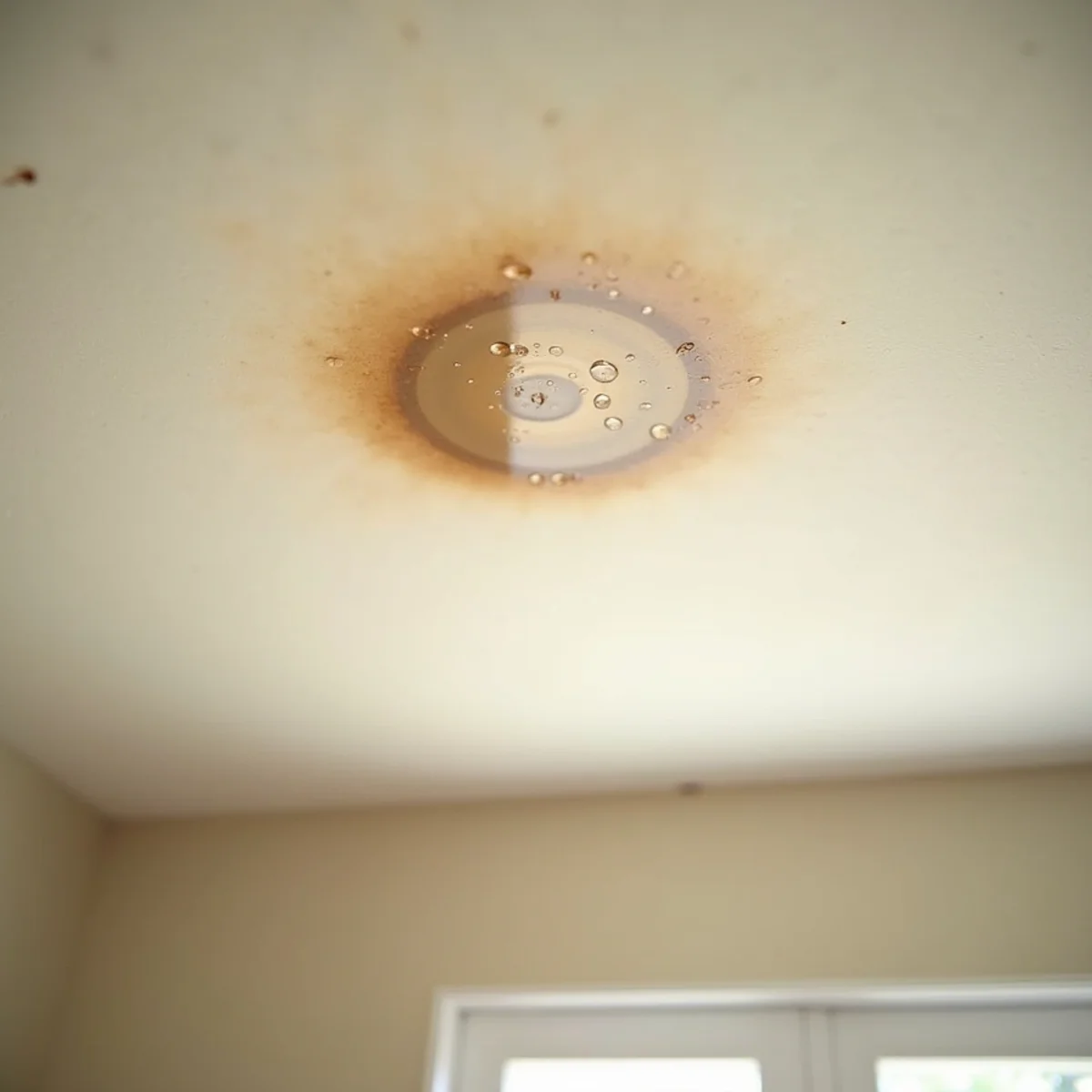
- Staining, bubbling paint, or a sag on a wall or ceiling
- A warm patch on a concrete slab floor
- Warped, cupped, or spongy flooring with no spill to explain it
- New cracks in drywall or tile, or a spot that feels cooler and damp
- Trickling or hissing water when every fixture is off
- An unexplained drop in water pressure across the house
Why Sacramento Homes Leak Where You Can't See
Plenty of homes across Sacramento were plumbed with galvanized steel or early copper that corrodes from the inside out as the years add up. The region's hard water speeds that decline along, coating pipe walls with mineral scale that eventually thins and weakens them until a pinhole opens.
The ground works against the pipes too. Sacramento's expansive clay soils swell with the winter rains and shrink through the long dry summer, and that seasonal push and pull stresses buried joints and slab penetrations until a hairline crack forms. Older neighborhoods like East Sacramento, Land Park, and Midtown, with their original mid-century plumbing, tend to show these problems first.

Related service
Pipe Repair in Sacramento
Repair for leaking, corroded, pinholed, or burst supply and drain pipes throughout a Sacramento home, sized to the real damage.
Explore this serviceWhen to Bring in Leak Detection
If the meter confirms movement but the source stays hidden, professional equipment can find it without tearing open finished walls and floors on a hunch. Acoustic sensors listen for the distinct sound of pressurized water escaping a pipe, thermal imaging maps the temperature difference a leak leaves behind, and pressure testing isolates the problem to a small section of line.
Pinpointing a concealed leak early usually means one focused repair instead of replacing water-logged framing, flooring, and drywall down the road. If you have seen the signs here and cannot locate the source, reach Bridelyra Plumbers at +1 (207) 419-2600 to schedule a leak detection assessment.
Frequently Asked Questions
Yes, and it is common. Leaks inside walls, under a slab, or along a buried main line can run for weeks while the only signs are a rising bill, a musty smell, a warm floor, or a spinning meter. Water often travels along framing and settles far from where the pipe actually failed.
It can. A pinhole in a supply line, a silent toilet, or a slow slab seep can waste hundreds of gallons a day, and that shows up plainly on a monthly statement even when you never see a drop of water inside the house.
Not always, but a warm patch on a slab is a classic sign of a hot-water line leaking under the concrete. It is worth investigating promptly, before the moisture spreads into flooring, framing, and the slab itself.
A plumber uses non-invasive tools first: acoustic listening equipment, thermal imaging cameras, and pressure tests that narrow the leak to a small area. That lets the actual opening be as small and targeted as possible, rather than exploratory demolition across a whole wall or floor.
Bridelyra Plumbers Editorial Team
Reviewed for practical accuracy by our plumbing team
Published September 8, 2025 · Updated February 11, 2026