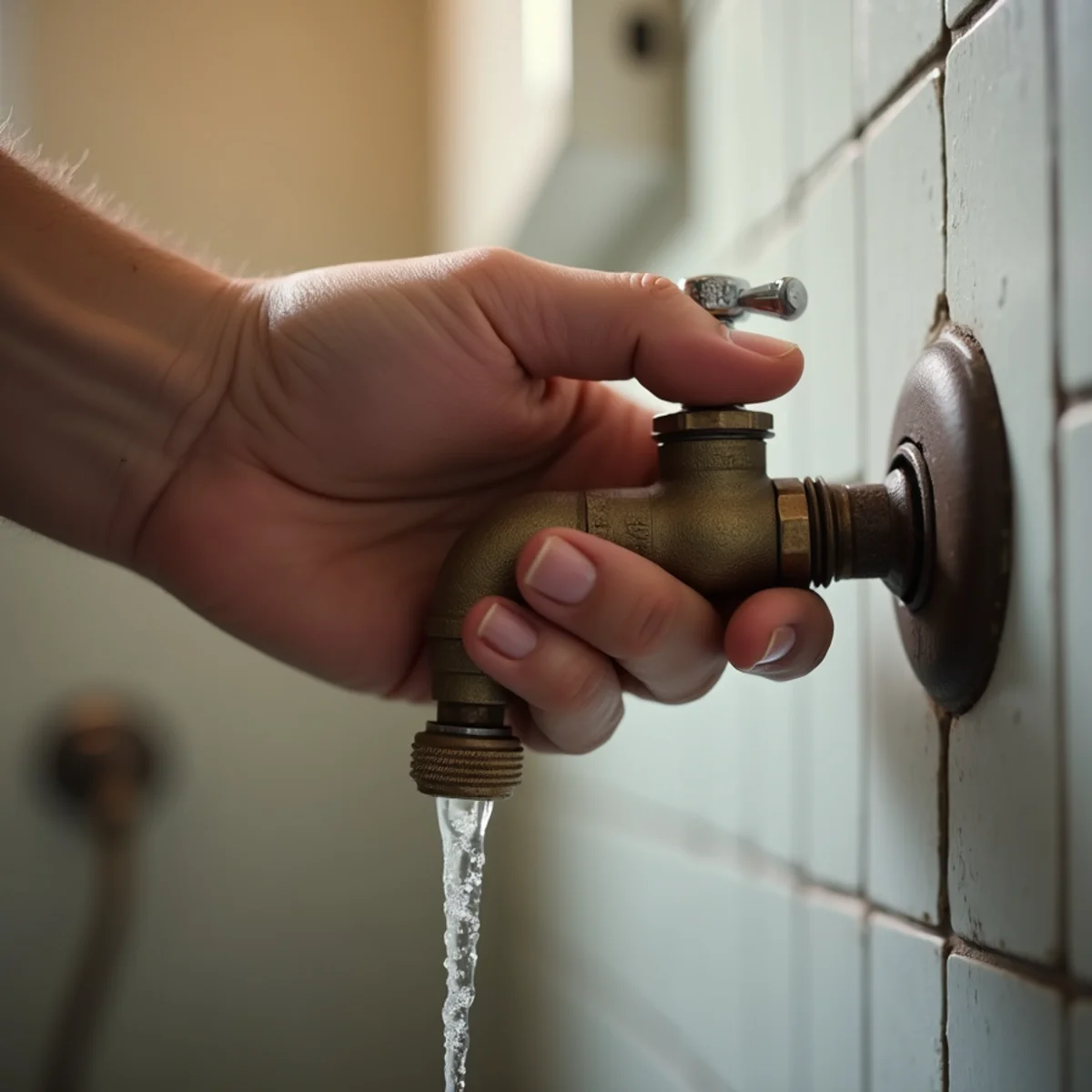
Safety note
If water reaches outlets, wiring, or your electrical panel, stay clear. Do not touch live electrical components or stand in standing water to reach a switch. Do not attempt repairs on gas lines. Wait for a professional to make the area safe.
Step 1: Stop the Water First
Nothing else matters until the flow stops. For a leak at a single fixture, close the local shutoff valve under the sink or behind the toilet, turning it clockwise until it stops. For anything bigger, a burst line, a spraying joint, or water you cannot trace, go straight to the main shutoff, usually where the supply line enters the house, in the garage, a utility closet, or along an exterior wall, with a second valve out by the meter at the street.
This is why it pays to locate your main valve before you ever need it. Turn it clockwise until it stops, then open a faucet at the lowest point in the house, an outdoor spigot or a basement or ground-floor tub, to bleed off the pressure still sitting in the lines. That drains the pipes and slows the leak while you deal with everything else.
- Local fixture valve for an isolated drip at one sink or toilet
- Main shutoff for a burst, spraying, or untraceable leak
- Turn valves clockwise to close; open a low faucet afterward to drain remaining pressure
- Know where the main shutoff is now, before an emergency
Step 2: Stay Clear of Water Near Electricity
Before you start mopping or moving things, check for the one hazard that changes everything. Water and electricity together are dangerous. If water has reached outlets, light fixtures, extension cords, or the electrical panel, do not step into it.
Only if you can reach your breaker panel from a dry spot, switch off power to the affected area. Never touch live electrical components, and never stand in standing water to reach a switch or unplug something. If you cannot tell whether an area is safe, treat it as unsafe and wait for a professional rather than risk a shock.
Step 3: Contain the Water and Limit the Damage
With the flow stopped and the area confirmed safe, deal with what already escaped. Move furniture, electronics, and anything valuable clear of the wet area, pull up rugs, and set buckets or towels under any lingering drips. Lift the skirts of upholstered furniture off wet carpet by placing foil or wood blocks under the legs so the stain and moisture do not wick upward.
Then get the water out and the air moving. Blot or vacuum standing water with a wet-dry vacuum if you have one, open windows, and run fans and a dehumidifier. Speed matters here: mold can take hold within a day or two in soaked drywall and carpet padding, a real concern during Sacramento's damp, cool winter stretches when things dry slowly.
- Move valuables and electronics out of the wet zone first
- Blot or vacuum standing water; do not let it sit
- Run fans and a dehumidifier and open windows to dry the space
- Lift furniture legs off wet carpet to stop wicking and staining
Related service
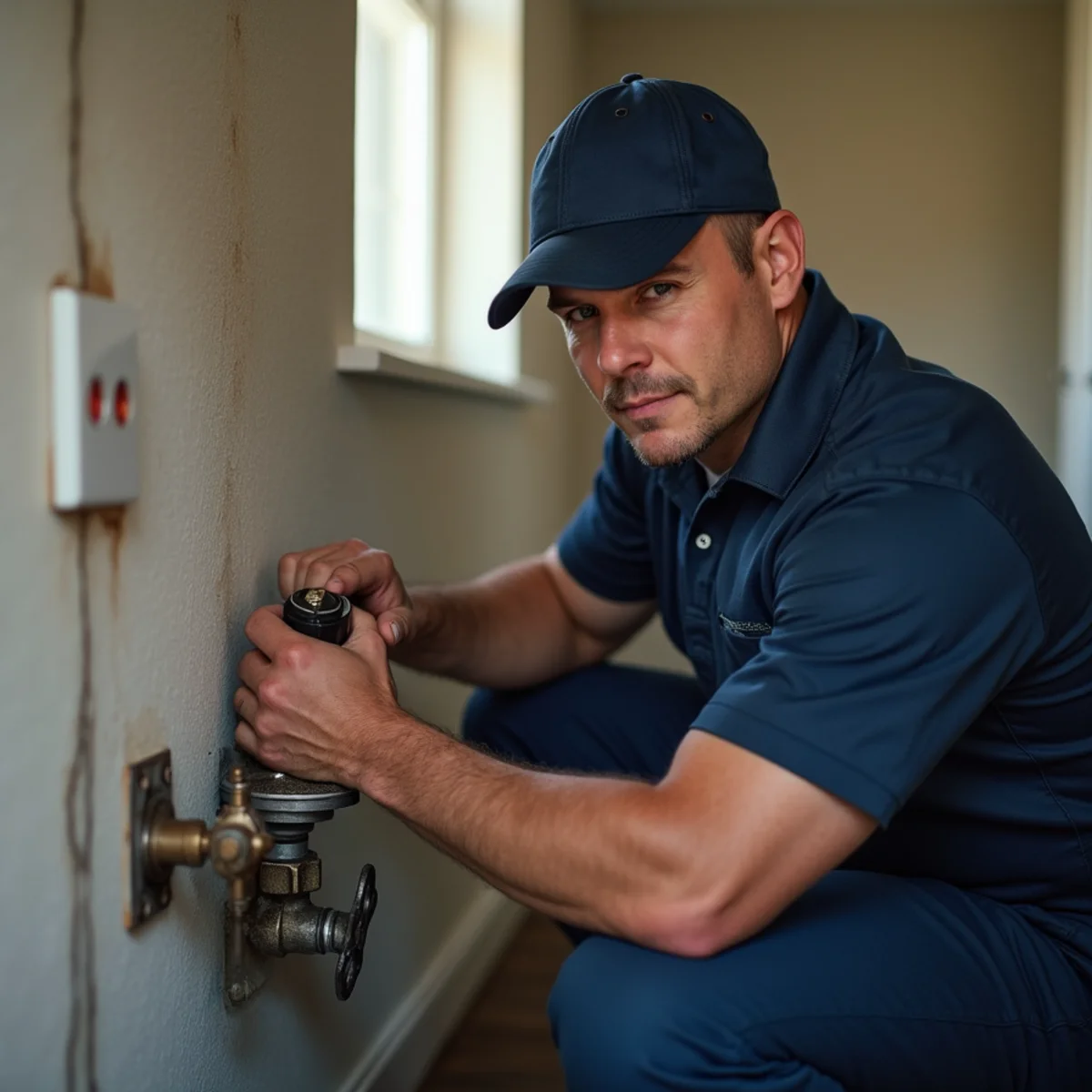
Emergency Plumbing in Sacramento
Prompt response for burst pipes, active leaks, sewage backups, and overflowing fixtures when a plumbing problem cannot wait for a routine appointment.
Explore this serviceStep 4: Temporary Fixes That Buy Time
On an accessible pipe, a wrap can slow a small leak until help arrives, but treat it as a stopgap, never a repair. Wipe the pipe dry first, since most patches will not grip a wet surface. Self-fusing silicone repair tape works on a pinhole, a rubber patch held with a hose clamp can bridge a small split, and epoxy putty can seal a weeping joint once the surface is clean and dry.
These hold for hours, not weeks. Pressure keeps working against any patch, so a wrapped pipe still needs a proper repair before you trust that line again. Do not attempt to solder, cut, or permanently repair a pressurized line yourself, and never patch a gas line or anything you are unsure about, leave those for a professional.
- Self-fusing silicone repair tape for a pinhole
- Rubber patch and hose clamp for a small split
- Epoxy putty on a dry, clean surface for a joint seep
- Dry the pipe first, and keep the water shut off while the patch cures
Step 5: Document Everything for Insurance
Before you clean up completely, record the damage. Sudden, accidental water damage from a failed pipe is often covered by homeowners insurance, but a claim goes far smoother with evidence gathered while the scene is fresh.
Take clear photos and a video walk-through of the leak, the water, and every affected item and surface. Note the wet materials and any damaged belongings, including brand and condition where you can. Save receipts for anything you buy to mitigate the damage, like fans or a wet-dry vacuum, and hold off on discarding ruined items until you have documented them or spoken with your insurer.
- Photograph and film the leak source and all water damage
- List damaged belongings with brand, model, and condition
- Keep receipts for cleanup supplies and emergency repairs
- Do not throw out damaged items until they are documented
Related service
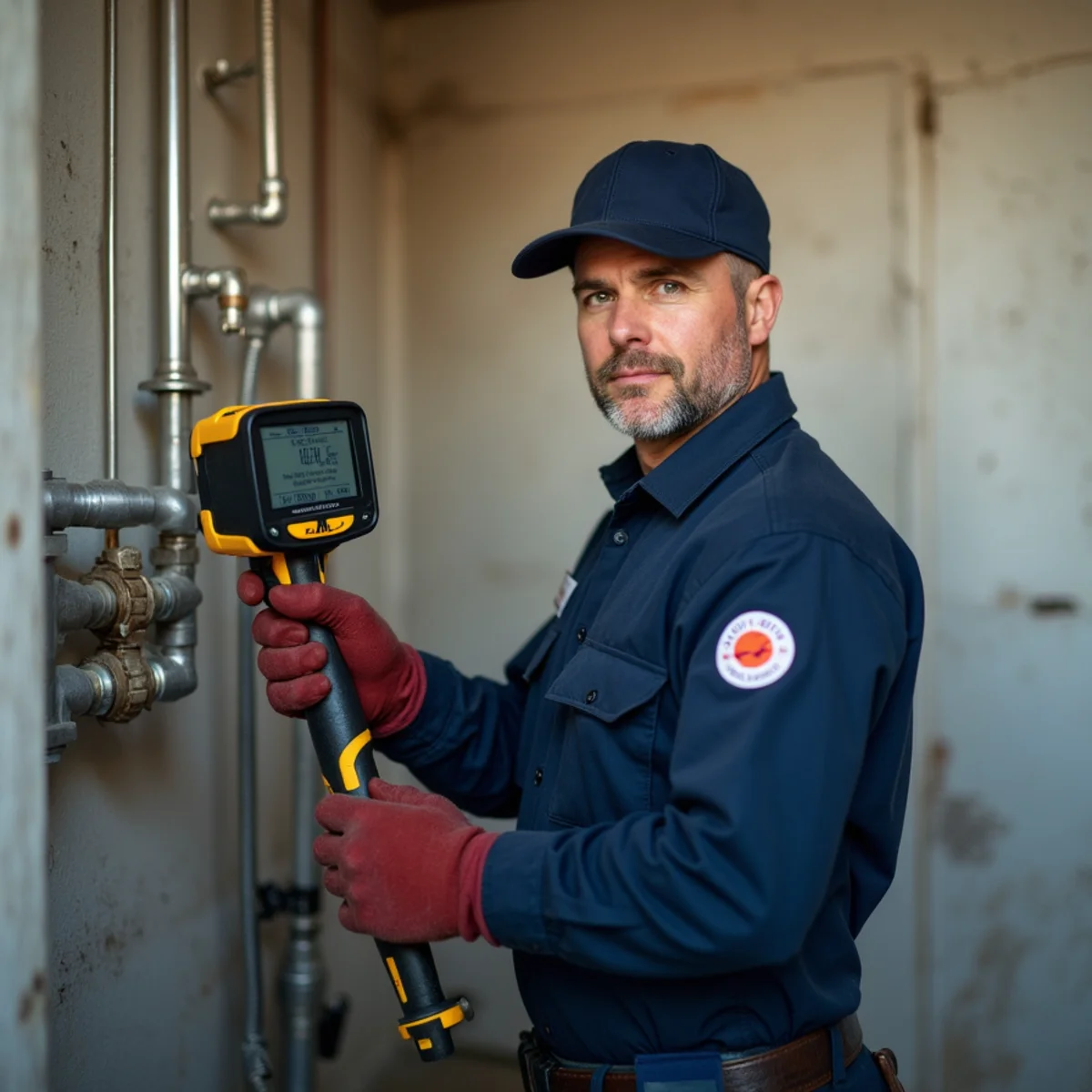
Leak Detection in Sacramento
Pinpointing hidden water leaks behind walls, under floors, and beneath slabs with acoustic and thermal methods, before they turn into major damage.
Explore this serviceWhy Pipes Leak in the First Place
Knowing the cause helps you explain the problem and prevent the next one. In Sacramento homes, the usual suspects are corrosion in aging galvanized or early copper lines, mineral scale from hard water thinning pipe walls over time, worn joints and fittings, and excessive water pressure hammering the system.
Cold snaps play a role too. Sacramento winters rarely stay below freezing for long, but an unheated garage, a crawlspace, or an exposed hose bib can freeze on the coldest nights and split a line that leaks once it thaws. Insulating those vulnerable runs is a small step that prevents a big mess.
When to Call for Emergency Help
Some leaks need a plumber immediately: a burst line, water you cannot shut off, flooding anywhere near electrical equipment, or a leak inside a wall, ceiling, or slab where you cannot see the damage it is doing. Sewage backups and anything you cannot control safely also belong in professional hands.
If you are up against an active leak you cannot manage, call Bridelyra Plumbers at +1 (207) 419-2600. Tell us what you see and what you have already shut off, so the response arrives focused on the right problem.
Frequently Asked Questions
Shut off the water. Use the local valve under the sink or behind the toilet for a single fixture, or the main shutoff for a burst or untraceable leak. Then open a low faucet to drain the remaining pressure. Everything else, cleanup and repair, comes after the flow is stopped.
In most Sacramento homes it sits where the supply line enters the house, often in the garage, a utility closet, or along an exterior wall. There is usually a second valve out by the meter at the property line. Locate yours before you need it, and make sure everyone in the home knows where it is.
Sudden, accidental water damage from a failed pipe is frequently covered, while damage from long-term seepage or neglected maintenance often is not. Coverage varies by policy, so document everything with photos and video and check with your insurer. Keeping receipts for cleanup and emergency repairs helps your claim.
Better not to. A tape or clamp patch only buys time to limit damage, and steady pressure can push right past it. Keep the water shut off to that line and have the pipe properly repaired before you rely on it again.
Bridelyra Plumbers Editorial Team
Reviewed for practical accuracy by our plumbing team
Published September 22, 2025 · Updated March 4, 2026