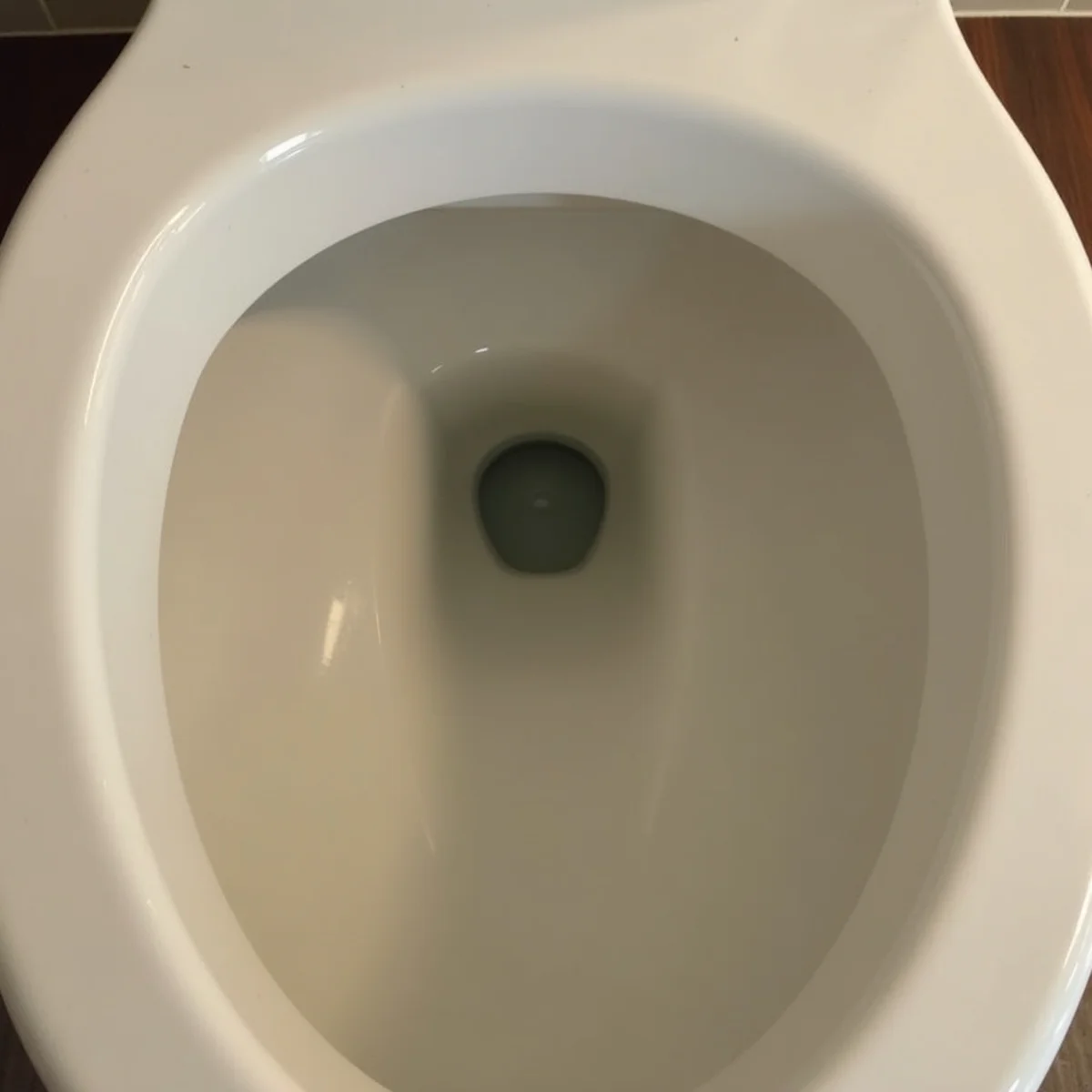
How the Tank Is Meant to Work
When you flush, the flapper lifts and lets the tank dump its water into the bowl. As the tank empties, the float drops and opens the fill valve, which refills the tank until the float rises far enough to shut the valve off again. The overflow tube in the middle is a safety drain that sends excess water into the bowl instead of onto your floor.
A toilet that runs means one step in that cycle never finishes, so the fill valve keeps feeding water it thinks the tank still needs. Once you picture the sequence, the culprit is much easier to spot. Lifting the tank lid and watching one full flush and refill will show you exactly where the cycle is failing.
The Flapper Is Usually the Culprit
The rubber flapper seals the opening at the bottom of the tank. Over time it warps, stiffens, or picks up mineral crust from Sacramento's hard water, and it stops seating tightly. Water then trickles into the bowl nonstop while the fill valve refills to keep up. This is also the cause behind phantom flushing, where a toilet refills on its own every so often even when no one has touched it.
There is an easy test: drop a little food coloring or a dye tablet into the tank and wait ten to fifteen minutes without flushing. If color bleeds into the bowl, the flapper is leaking and almost always needs replacing. Match the new flapper to your toilet model, since a near-fit often leaks just as badly.
- A warped or stiffened flapper that no longer seals
- Mineral crust built up on the flapper seat
- A lift chain too short or too long to let it drop shut
- A chain so long it slips under the flapper and props it open
Check the Chain and the Overflow Level
Before replacing parts, rule out two quick things. The lift chain should have just a little slack when the flapper is closed. Too tight and it holds the flapper open a hair; too loose and it can slip under the flapper and block the seal. Adjusting which link hooks to the flush lever often solves the problem in seconds.
Next, look at the water level. It should sit about half an inch to an inch below the top of the overflow tube. If water is spilling into that tube, the fill valve never senses that the tank is full, so it keeps running. That points you to the float, covered next.
Related service
Plumbing Repair in Sacramento
Diagnosis and repair for the everyday leaks, drips, running toilets, and low-pressure complaints that quietly wear down a Sacramento home's plumbing.
Explore this serviceFloat and Fill Valve Trouble
If the float sits too high, water climbs above the overflow tube and pours down it endlessly, keeping the fill valve open. On modern column-style valves you turn or slide an adjustment clip to lower the float; on older ball-style floats you gently bend the arm down. Set the shutoff so the water stops below the top of the overflow tube.
The other common cause is a worn fill valve that no longer shuts off completely, sometimes from grit lodged under its seal. When adjusting the float does not stop the flow, the valve assembly itself has usually reached the end of its life. A universal fill valve is an inexpensive part and a common homeowner replacement.
The Flush Valve Seat
If a brand-new flapper still will not seal, the problem may be the flush valve seat, the plastic rim the flapper closes against. Years of mineral buildup or a nick can leave it rough enough that no flapper seats cleanly.
Running a finger around the rim will reveal grit or pitting. A gentle cleaning sometimes restores the seal, but a cracked or badly worn seat means the flush valve needs to be rebuilt or replaced, which involves removing the tank and is a reasonable point to bring in a plumber.
Related service
Water Softener Services in Sacramento
Installation, repair, and service of water softeners that tame hard water and its mineral buildup.
Explore this serviceWhy It Wastes More Than You'd Guess
A quietly leaking flapper can send well over a hundred gallons a day down the drain, and a fill valve stuck fully open wastes far more than that. None of it makes a sound loud enough to notice, but all of it lands on your water bill, and a spike in that bill is sometimes the first sign a toilet has been running.
Since the parts cost only a few dollars and the waste never stops, a running toilet is one of the most worthwhile repairs to knock out quickly.
When to Call for Toilet Repair
If a fresh flapper and a properly set float still do not stop the running, or if you notice water pooling at the base of the toilet, the trouble may be the fill valve, the flush valve seat, or a failing seal. Those are quick repairs for a plumber and worth doing before the waste keeps mounting.
For a toilet that keeps running after the basic checks, contact Bridelyra Plumbers at +1 (207) 419-2600.
Frequently Asked Questions
It depends on the cause, but a leaking flapper can waste well over a hundred gallons a day, and a fill valve running full-open wastes considerably more. Either way, it shows up plainly on your monthly bill.
Yes. Mineral deposits from Sacramento's hard water build up on the flapper and its seat, keeping it from sealing tightly, so water seeps into the bowl and the tank keeps refilling to replace it.
That is phantom flushing, and it points to a slow flapper leak. Water seeps past the flapper until the level drops enough to trigger the fill valve for a short refill. A dye test in the tank will usually confirm the flapper needs replacing.
Rarely urgent, but it wastes water continuously, so it is worth fixing soon rather than later. Water pooling on the floor around the base, on the other hand, should be looked at promptly.
Bridelyra Plumbers Editorial Team
Reviewed for practical accuracy by our plumbing team
Published November 17, 2025 · Updated April 2, 2026