Safety note
Standing sewage carries harmful bacteria. Keep people and pets well away from any backup, avoid all contact with the water, and leave contaminated water and the blocked line to a professional.
Local Clog, or Main Line Blockage?
Every fixture drains through its own branch line, and all those branches feed into a single main line that carries waste out to the sewer or septic system. A clog in one branch backs up only that fixture. A blockage in the main backs up everything sitting upstream of it, all at once.
So when several drains slow or overflow together, especially the lowest fixtures in the house, the obstruction is in the shared main, not in any one branch. That single distinction changes both the likely cause and the fix.
- One slow fixture: a local branch clog
- Several backing up together: a main line blockage
- Lowest fixtures affected first: a classic main line sign
Why the Lowest Fixtures Flood First
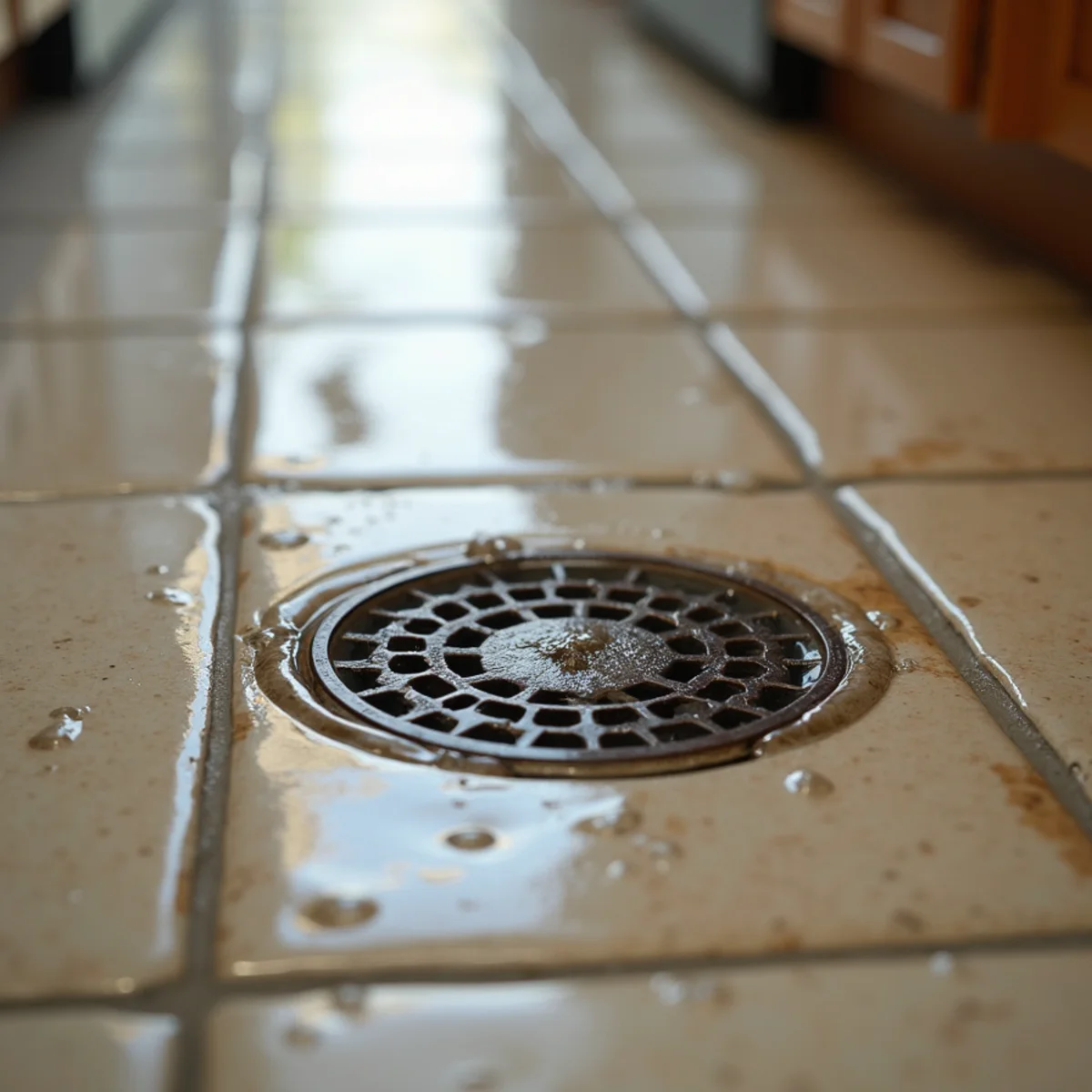
When the main is blocked, wastewater from every fixture still tries to leave the house and hits the obstruction. With nowhere forward to go, it backs up and rises until it finds the lowest opening in the system, which is why a ground-floor shower, a tub, or a basement or laundry-room floor drain is usually the first place water appears.
Running an upstairs sink and watching a downstairs drain gurgle or well up is one of the clearest confirmations that the problem is the shared main rather than any single fixture.
Telltale Signs to Watch For
Main line trouble has a recognizable signature. Flushing a toilet pushes water up into a nearby tub or shower, or a distant drain gurgles the moment you run a fixture across the room. These cross-fixture reactions mean waste has nowhere to escape and is forcing its way back out through the lowest opening it can find.
A sewage odor, water welling up around a floor drain, or bubbling in the toilet bowl all point to the same thing: a main line that is obstructed and running out of room.
- A toilet flush pushing water up into a tub or shower
- Gurgling from one fixture when you run another
- Sewage odor, or water pooling around a floor drain
Related service
Drain Cleaning in Sacramento
Clearing slow and blocked drains at the sink, tub, shower, and floor, then confirming flow is restored to the full pipe wall.
Explore this serviceCommon Causes in Sacramento
Around here, tree-root intrusion is the leading cause of main line blockages. Roots hunt for moisture, find their way into a pipe joint, and then swell until they choke the line and snag everything that tries to pass. It is a common story in Sacramento's tree-lined established neighborhoods.
Sacramento's older clay and cast-iron sewer pipes are especially vulnerable, and years of grease, sediment, and scale narrow the passage even more. Flushed wipes and other items that do not break down, along with a bellied or sagging section of pipe that collects debris, round out the usual causes. From there, one heavy laundry day is often all it takes to tip a marginal line into a full backup.
What to Do Right Now
Stop putting water into the system. Hold off on flushing toilets, running the dishwasher, and doing laundry, because every gallon you add has nowhere to go and only makes the backup worse. Keep people and pets clear of any standing wastewater, which can carry harmful contaminants.
A capped outdoor sewer cleanout can be under pressure during a backup and release raw sewage if it is opened, so leave it to a professional and keep clear of the area. Do not reach for chemical drain cleaner on a main line blockage. It rarely clears a serious obstruction, and it leaves caustic liquid pooled in the line that becomes a hazard for the plumber who has to open it afterward.
Related service
Hydro Jetting in Sacramento
High-pressure water cleaning that scours grease, hard-water scale, root hairs, and packed sludge off the full inside wall of a drain or sewer line.
Explore this serviceWho Is Responsible for the Blockage
Where the clog sits can affect who handles it. In most cases the homeowner is responsible for the sewer lateral, the pipe running from the house out to where it meets the public main, and a blockage anywhere along that lateral is the homeowner's to clear. If the obstruction is in the public main in the street, that is generally the utility's responsibility.
A camera inspection is what settles the question, showing exactly where the blockage falls. If you are unsure, it is reasonable to report a suspected public-main problem to the local utility while also having your own lateral checked.
How a Professional Diagnoses It
A plumber can run a camera down into the main to see exactly what is blocking it and precisely where, then match the clearing method to the cause, whether that is cabling or hydro jetting. Seeing the blockage also shows whether roots or damaged pipe are going to bring the problem straight back, which is the difference between a one-time clearing and a line that needs repair.
If multiple drains are backing up, contact Bridelyra Plumbers at +1 (207) 419-2600. Acting promptly is what keeps a blocked main line from turning into raw sewage on your floors.
Frequently Asked Questions
That cross-reaction means the main line is blocked. Waste from the toilet cannot flow out to the sewer, so it backs up and rises through the lowest opening available, which is often a tub or shower drain.
Usually not safely or effectively. Main line clogs, root intrusion in particular, need proper equipment and often a camera to locate them, so professional clearing is the reliable and safer route.
The homeowner is typically responsible for the lateral running from the house to the public main, while a blockage in the public main itself generally falls to the utility. A camera inspection pinpoints where the clog sits and settles the question.
No. Chemical cleaners rarely clear a serious main blockage, and they pool in the line, creating a real hazard for anyone who has to work on it afterward. A professional method is both safer and more effective.
Bridelyra Plumbers Editorial Team
Reviewed for practical accuracy by our plumbing team
Published January 5, 2026 · Updated May 13, 2026