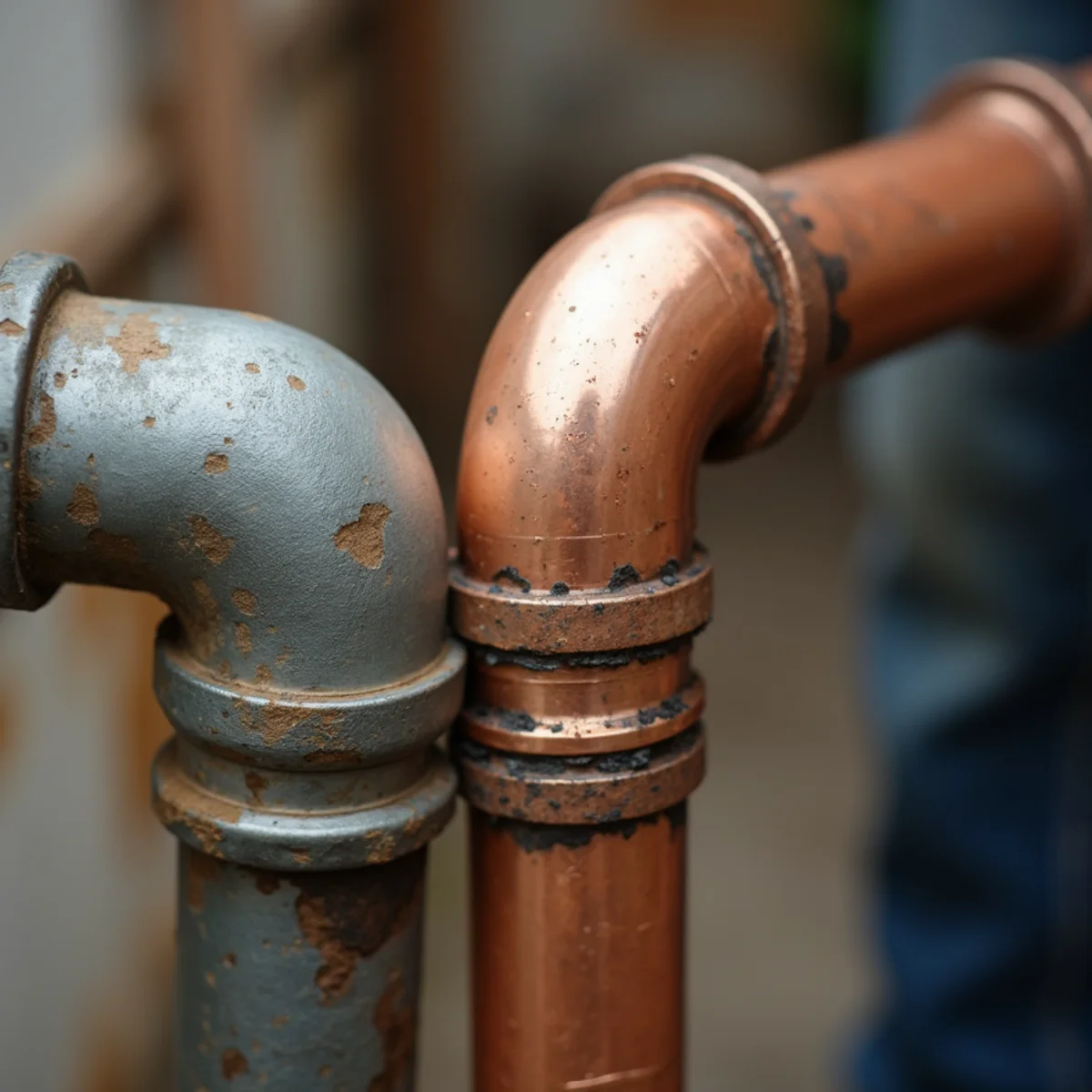
Recurring Leaks Are the Clearest Signal
A single leak is just a repair. A pattern of leaks in different places is a message, and the message is that the pipe material itself is giving out. When corrosion has thinned the pipe walls throughout a system, patching one pinhole only sends the problem to the next weakest spot.
If you find yourself calling for the same kind of repair every few months, the money and hassle pile up fast, and that cumulative cost is usually what tips the scale toward repiping.
- Several pinhole leaks within a short span of time
- Leaks turning up in different parts of the house
- Repairs that hold briefly, then fail again nearby
Aging Pipe in Sacramento Homes
Older Sacramento houses were routinely plumbed with galvanized steel, which corrodes from the inside over decades, restricting flow and shedding rust as it goes. Galvanized supply lines were typically rated for a few decades of service, so a home still on its original steel from the mid-century is running well past what that pipe was built to give.
Some homes from a later era also carry polybutylene, a gray plastic supply line well known for turning brittle and failing without much warning. If your home still runs its original galvanized or polybutylene lines, then discolored water, sagging pressure, and repeat leaks are not separate problems, they are the same underlying aging showing up in different ways. Repiping treats that root cause rather than the symptoms.
Clues at the Tap
Corroding pipe gives itself away where you use the water. Rust-tinted flow, a metallic taste, water that runs cloudy or discolored after sitting overnight, and pressure that has slowly faded across the whole house all point back to the same interior deterioration.
Once mineral scale and corrosion have narrowed the bore of the pipe, no amount of aerator cleaning brings the flow back. At that stage, replacing the affected lines is the only thing that actually restores both pressure and water quality.
- Rust-colored or cloudy water, worst first thing in the morning
- A metallic taste or persistent musty odor
- Pressure that has faded gradually across every fixture
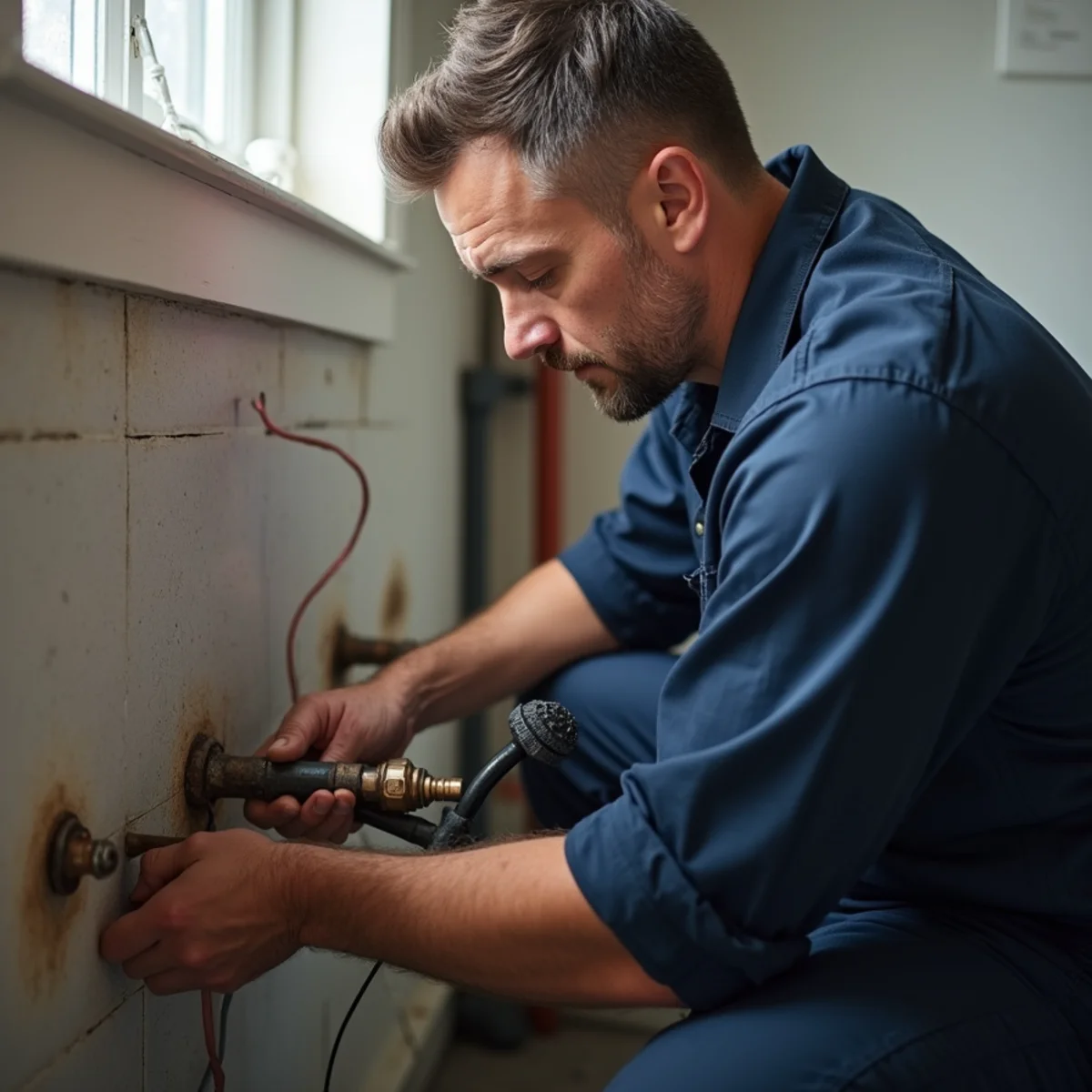
Related service
Pipe Repair in Sacramento
Repair for leaking, corroded, pinholed, or burst supply and drain pipes throughout a Sacramento home, sized to the real damage.
Explore this serviceYour Repipe Material Options
Modern repipes generally use one of two materials, and it helps to understand both before you decide. PEX is a flexible plastic tubing that resists corrosion and scale, tolerates cold snaps better than rigid pipe, and threads through walls with fewer openings, which usually makes it the less disruptive and more budget-friendly path. Copper is rigid, long-proven, and preferred by some homeowners for its durability and track record, though it costs more to material and labor.
Neither choice is universally right. The best fit depends on your home's layout, your water chemistry, and your budget. A plumber can walk you through the trade-offs for your specific house rather than defaulting to one material for every job.
Weighing Repair Against Replacement
The honest question is cumulative cost. A few isolated repairs on an otherwise sound system are money well spent. But once repair bills, the risk of water damage, and the water lost to leaks start stacking up year over year, a repipe becomes the more economical choice over the long run.
Modern piping shrugs off corrosion and mineral buildup far better than aging galvanized steel, so a repipe also buys back reliability and cleaner water going forward. A plumber can inspect representative sections to judge how far the decline has spread before you commit either way. The cost of a whole-home repipe varies widely with the home's size, the number of fixtures, the pipe material, and how much wall access the layout requires, so a walkthrough and written estimate are the only reliable way to price your own project.

Related service
Leak Detection in Sacramento
Pinpointing hidden water leaks behind walls, under floors, and beneath slabs with acoustic and thermal methods, before they turn into major damage.
Explore this servicePlanning a Repipe With Less Disruption
Repiping sounds like tearing the house apart, but a planned project is far calmer than a running string of emergency repairs. Crews plan routes to keep wall openings to a minimum and reach the lines through strategic access points, patching the openings once the new pipe is in and tested. A professional assessment maps the scope, flags which lines are in the worst shape, and lets you decide between phasing the work and doing it all at once. Water is typically off for parts of the process, and the wall and paint repairs afterward are worth factoring into your plans.
If you are trying to judge whether your home has reached this point, contact Bridelyra Plumbers at +1 (207) 419-2600 for an inspection and a clear picture of your options.
Frequently Asked Questions
Galvanized steel looks dull gray, gives a metallic ring when tapped, and holds a magnet. A plumber can confirm the material for certain and gauge how far corrosion has progressed inside the lines.
Both are sound modern choices. PEX is flexible, resists corrosion and scale, and usually installs with less wall opening and lower cost. Copper is rigid and long-proven but costs more. The right pick depends on your home's layout, water chemistry, and budget, which a plumber can review with you.
Not usually. Plumbers plan routes to keep wall openings to a minimum, reaching the lines through strategic access points, so a well-planned repipe is a good deal less invasive than most homeowners expect. The openings are patched once the new lines are tested.
Usually not. A single isolated leak on otherwise sound pipe is simply a repair. Repiping earns its keep once leaks keep recurring across the system and the pipe material itself is the thing that is failing.
Bridelyra Plumbers Editorial Team
Reviewed for practical accuracy by our plumbing team
Published December 15, 2025 · Updated May 1, 2026