Safety note
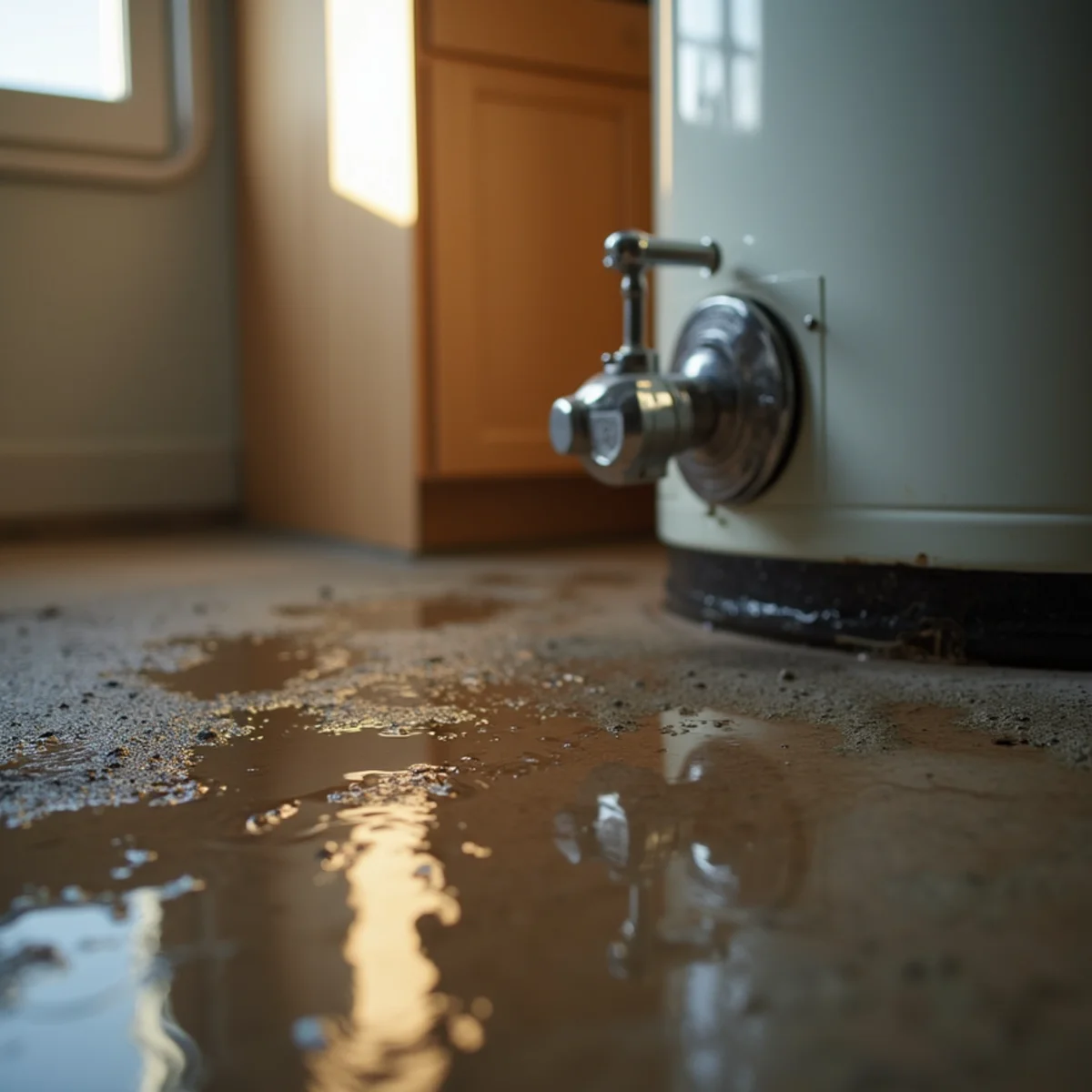
A leaking water heater brings together hot water, pressure, and gas or electrical connections. Keep water clear of electrical parts, do not tamper with the relief valve or gas line, and call a professional to handle the repair.
First Steps When You Spot a Leak
Before you try to figure out anything, cut the risk down. Close the cold-water shutoff on top of the heater so no more water feeds the tank, and switch the unit to off or pilot so it is not firing on a tank that may be draining.
Then mop up the standing water and keep the area dry, well away from any electrical connections at the base. If the leak is significant, moving stored items off the floor nearby protects them from water damage while you sort out the cause. These few steps limit the damage and make it safe to get close enough to trace where the water is actually coming from.
- Close the cold-water shutoff valve on top of the unit
- Set the heater to off or pilot
- Keep water away from electrical connections
- Mop up standing water and move nearby items to protect them
Is It Actually a Leak, or Condensation?
Not every bit of water under a heater is a leak. A tank can sweat when cold incoming water meets warm, humid air around the unit, leaving a light film or a few drops that look alarming but clear up as the water warms. This is most common on newer or recently refilled tanks and during humid stretches, and it is harmless.
The way to tell them apart is to dry everything, then watch. Condensation is a thin, even dampness that does not return once the tank is up to temperature. A true leak reappears and usually pools from a specific point you can trace. If drying the area and running a normal heating cycle leaves it dry, you were likely looking at condensation rather than a fault.
Leaks from Fittings and Valves
The most encouraging leaks come from serviceable parts, not the tank. The cold-water inlet and hot-water outlet connections up top can work loose over years of heating and cooling, and the drain valve near the floor sometimes stops sealing and weeps. A drain valve is among the most common sources of water at the base of a heater.
These are the good-news sources. A loose connection can often be snugged up and a failed drain valve swapped out, so a leak traced to a fitting is usually a repair rather than a reason to replace the whole heater. Because water tracks downhill, though, a drip from a top connection can pool at the floor and look like a bottom leak, which is exactly why tracing it to the true origin matters.
Related service
Water Heater Repair in Sacramento
Diagnosis and repair for tank and tankless water heaters that run cold, leak at the base, or heat unevenly.
Explore this serviceThe Temperature and Pressure Relief Valve
The temperature and pressure relief valve, or T&P valve, is a safety device that vents water whenever pressure or temperature inside the tank climbs too high. Water running from its discharge pipe can mean the valve is doing exactly its job against a genuine problem, or that the valve itself has worn out and no longer seals.
Either way, this is not a part to cap off or ignore. A dripping T&P valve sometimes signals dangerously high pressure in the system, often tied to thermal expansion or an incoming pressure issue, so a leak here belongs in the hands of a professional who can find out why it is releasing rather than just silencing it.
Sediment, Corrosion, and the Anode Rod
Some leaks trace back to what is happening slowly inside the tank. Sediment settling on the bottom traps heat against the steel, and that overheating can stress the tank and hasten corrosion until the shell finally gives. The anode rod, a sacrificial metal rod that corrodes on purpose to protect the tank lining, is the quiet counterweight to this; once it is used up, corrosion turns on the tank itself.
None of this shows on the outside until a leak appears, which is why routine flushing and periodic anode checks matter, especially in hard water. Catching a spent anode or heavy sediment during maintenance is far better than discovering it as a puddle from a tank that has already rusted through.
Related service
Leak Detection in Sacramento
Pinpointing hidden water leaks behind walls, under floors, and beneath slabs with acoustic and thermal methods, before they turn into major damage.
Explore this serviceA Leaking Tank Means Trouble
The serious source is the tank body itself. When water seeps from the shell rather than a fitting, corrosion has usually eaten through the tank wall from the inside, and there is no dependable way to patch that.
Sacramento's hard water pushes this along, dropping mineral sediment that speeds interior corrosion year after year. A tank leaking through its own shell is a clear sign the unit has reached the end of the line and replacement is the realistic path. If the leak is heavy, keeping the cold-water supply shut off until the unit is replaced prevents it from continually refilling and worsening the damage.
Getting It Diagnosed Safely
Finding the exact origin of a leak takes a careful look, and that origin decides everything about the repair. A professional can tell a fixable fitting or valve apart from a tank that has failed, rule out simple condensation, and steer you toward the right call instead of a costly guess.
If your water heater is leaking in the Sacramento area, contact Bridelyra Plumbers at +1 (207) 419-2600 for an assessment and safe handling of the repair or replacement.
Frequently Asked Questions
No. Leaks from the inlet and outlet connections or the drain valve are often a straightforward repair, and sometimes the water is only condensation. Only water seeping from the tank body itself, caused by internal corrosion, means the unit has to be replaced.
Dry the tank and the floor completely, then run a normal heating cycle and watch. Condensation is a thin, even dampness that does not come back once the water warms, while a real leak reappears and pools from a traceable point. If it stays dry, it was likely condensation.
The temperature and pressure relief valve releases water when pressure or temperature runs high, so a drip may reflect a real pressure problem, often from thermal expansion, or a valve that has failed. Either way it is a safety component and should be professionally evaluated, never capped.
Close the cold-water shutoff on top of the heater, set the unit to off or pilot, and keep water away from any electrical connections. Mop up standing water, move nearby items out of harm's way, then have the source diagnosed before deciding between a repair and a replacement.
Bridelyra Plumbers Editorial Team
Reviewed for practical accuracy by our plumbing team
Published January 12, 2026 · Updated May 6, 2026